The record is not decoration.
It is evidence — of what happened, who resisted, what power tried to soften, and why the message still belongs in public view.
Every statement begins with a record.
The Record is where the idea behind the design gets named. Some records are historical. Some are spiritual. Some are warnings. Some are personal. All of them ask the same question: what are we refusing to forget?
Memory gives the message roots.
Without context, a shirt is only a phrase. With memory, it becomes a witness.
Context turns emotion into strategy.
The goal is not only to feel something. The goal is to see clearly enough to move with purpose.
Refusal is where resistance begins.
Not every reminder is gentle. Some are built to interrupt forgetting.
Read the record.
Each entry connects a statement piece to the memory, lesson, warning, or source beneath it.
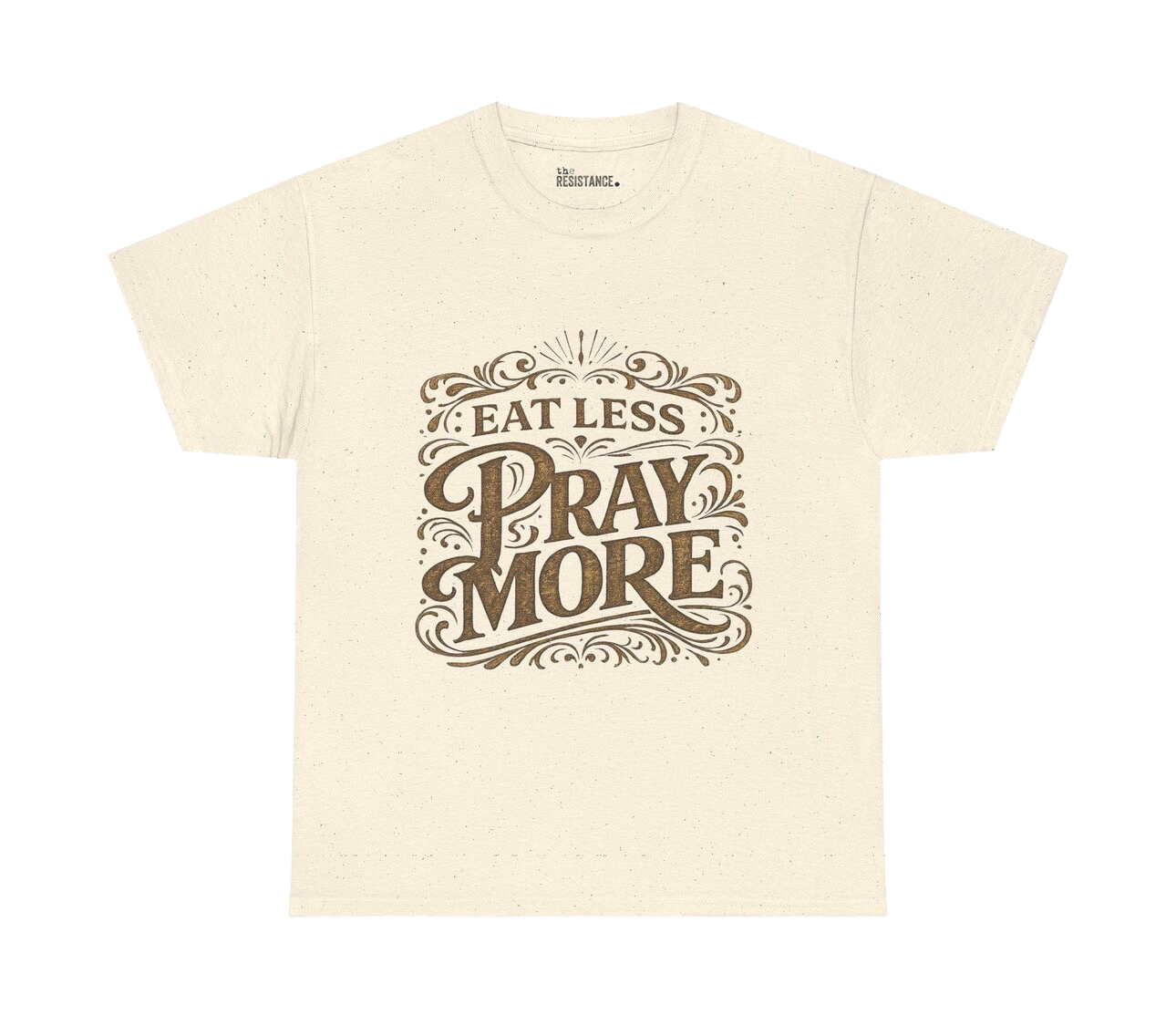
Eat less. Pray more.
This record begins inward. It is about fasting from more than food — appetite, distraction, impulse, and the version of the mind that mistakes craving for truth.
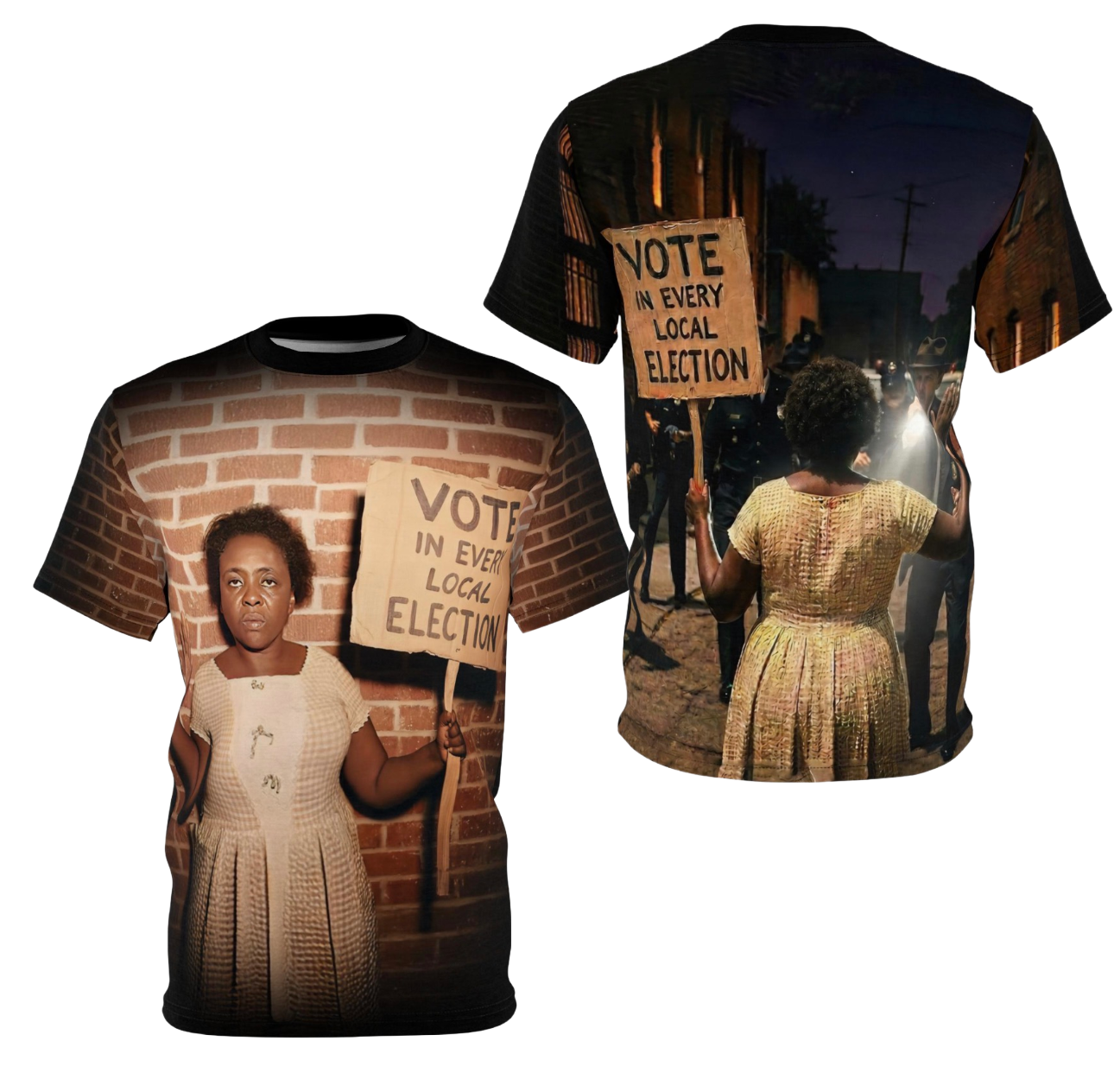
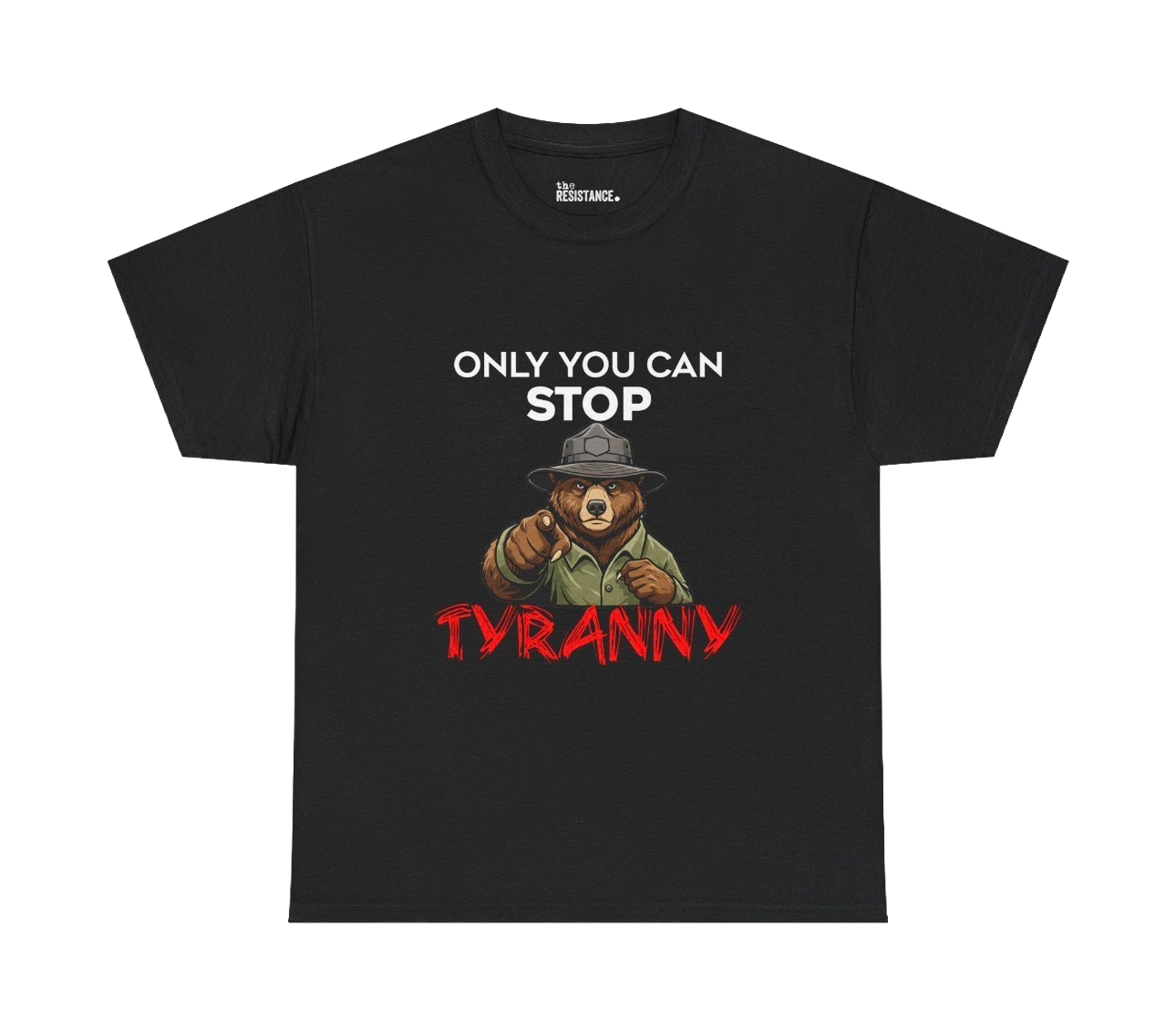
Only you can stop tyranny.
Democracy is not self-maintaining. Every right depends on people who notice the pattern before fear becomes policy and silence becomes permission.
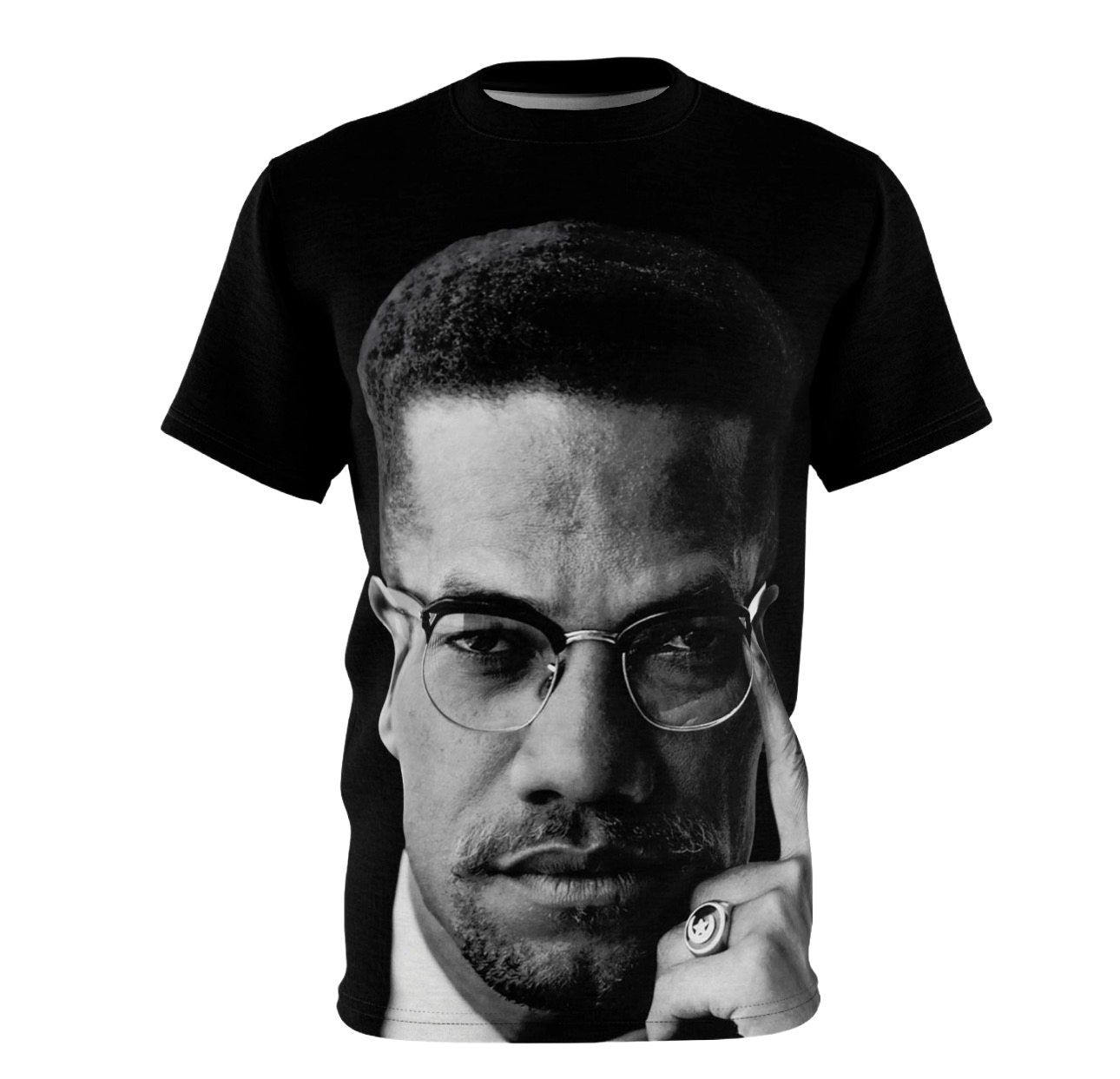
Truth does not ask permission.
Malcolm X insisted that the struggle for Black freedom had to be understood beyond comfort, beyond politeness, and beyond the boundaries power preferred.
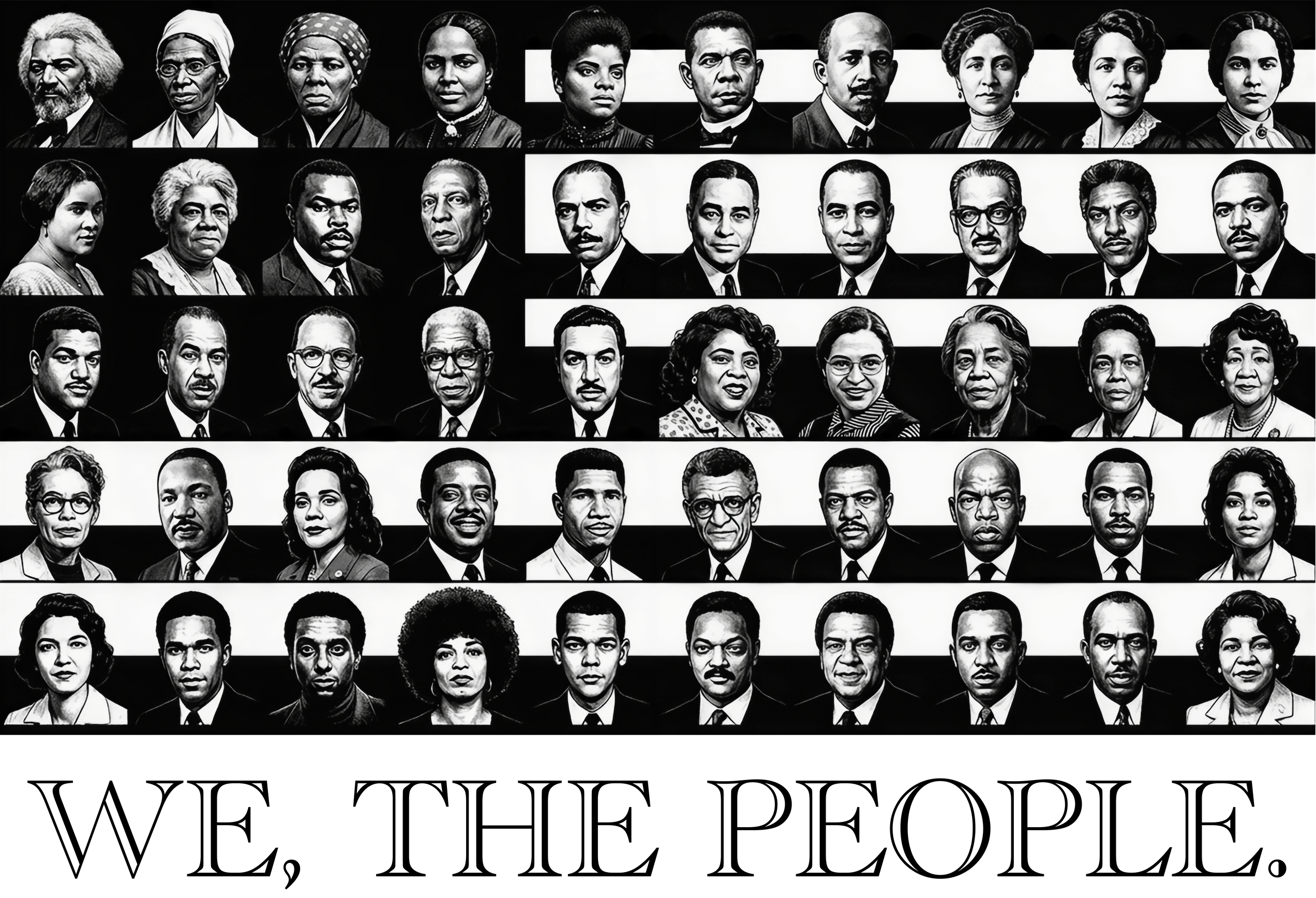
A flag made of memory.
This piece reimagines the American flag through Black leadership, sacrifice, resistance, law, movement, art, organizing, and the people who expanded the promise.
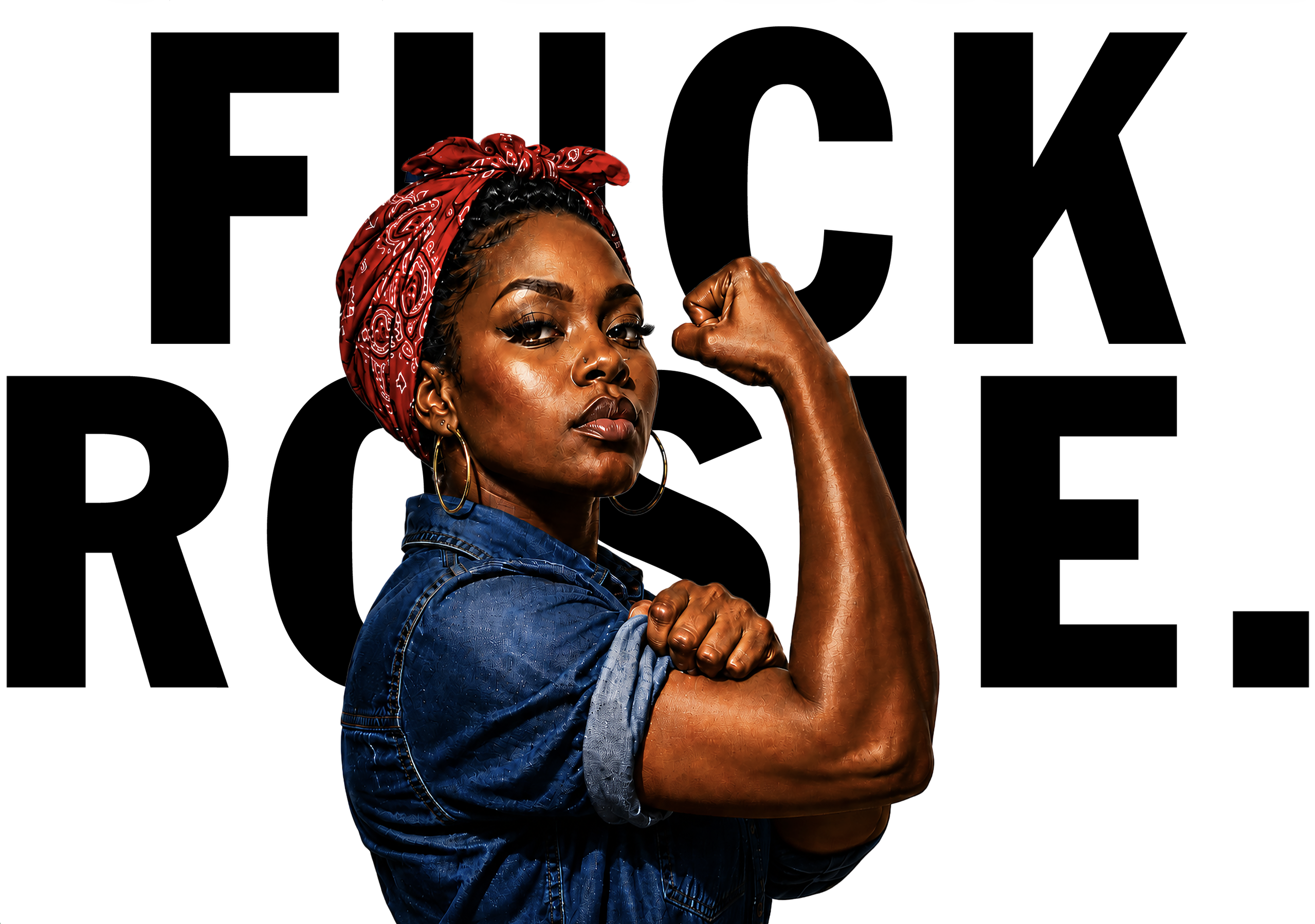
The labor was always Black.
This record challenges who gets centered in American labor memory and who gets reduced to the background after carrying the weight of the work.
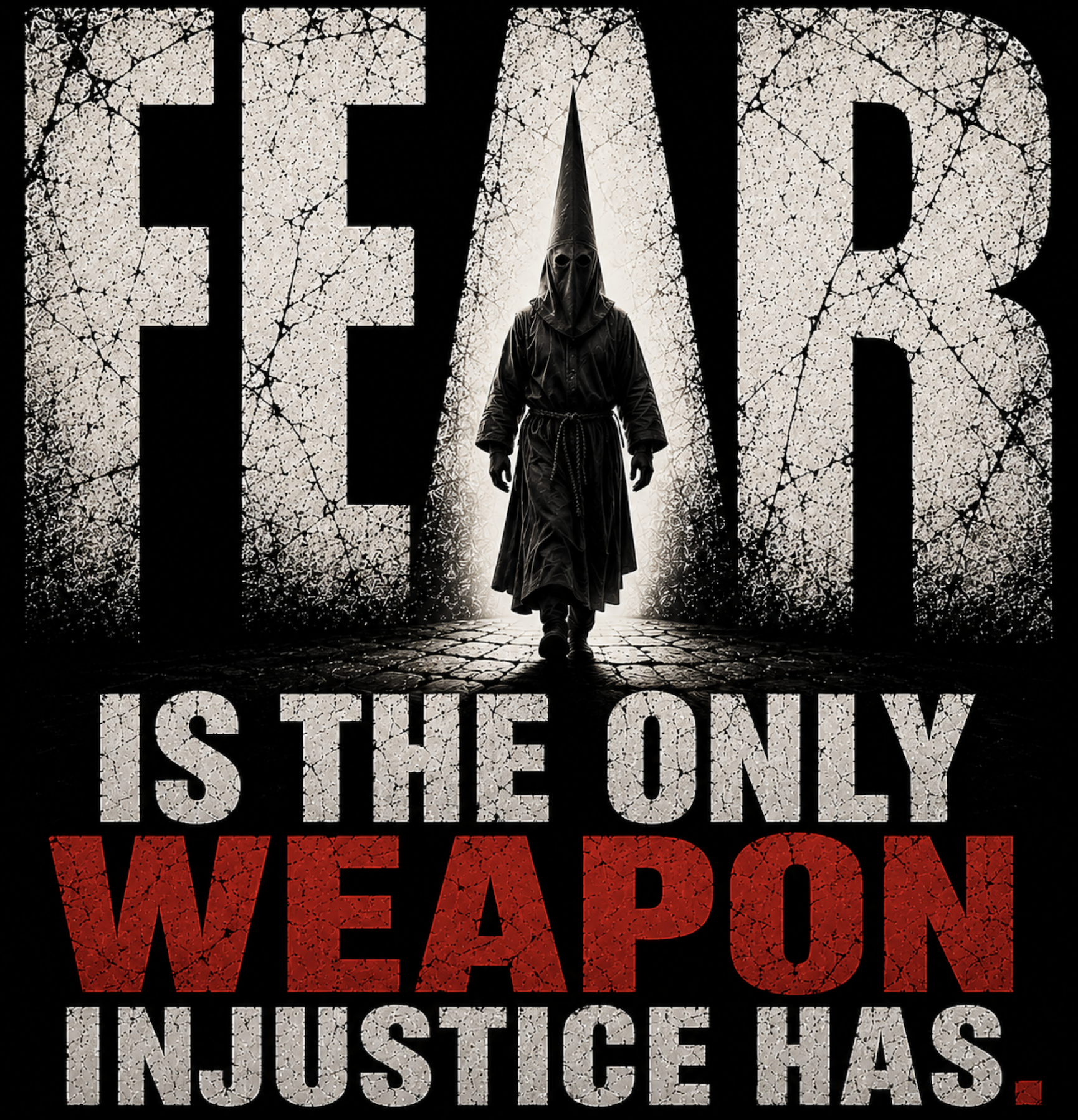
Fear is the oldest weapon.
Fear narrows the body, quiets the voice, and trains people to cooperate with what they know is wrong. Memory is one way people break it.
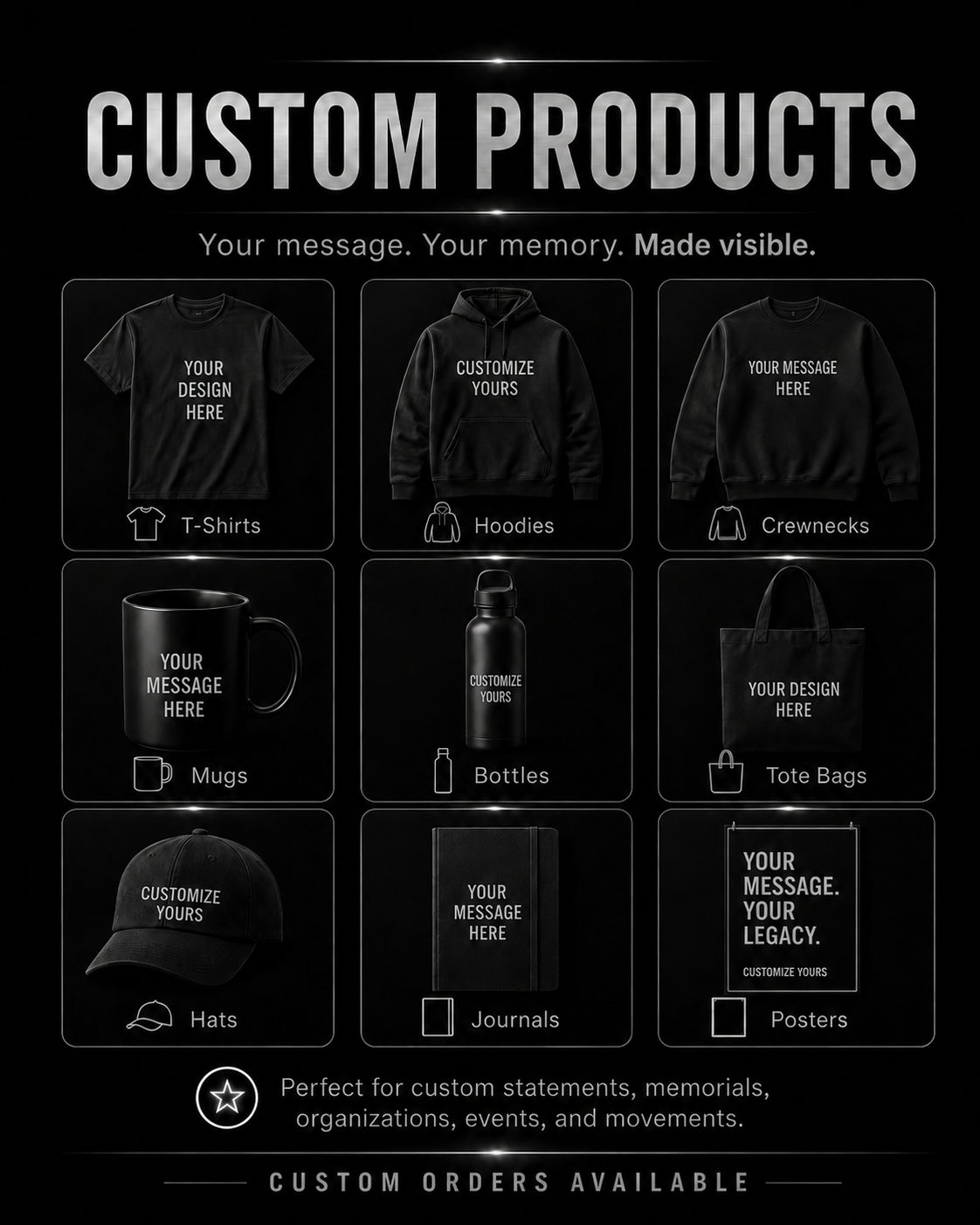
Your record belongs here too.
A family story, organization, memorial, event, movement, or phrase can become its own record when the message deserves a visual language.
Follow the record.
This page is a starting point. These sources help connect the designs to historical records, public archives, and movement memory.
Fannie Lou Hamer and the fight for voting rights
Smithsonian American Women’s History Museum overview of Hamer’s voting-rights work.
How Fannie Lou Hamer challenged a nation
National Museum of African American History and Culture story on Hamer’s witness and activism.
Malcolm X — National Archives
National Archives profile and research guide for Malcolm X.
Voting Rights Act of 1965
National Archives milestone document for the Voting Rights Act.
Civil Rights Act of 1964
National Archives milestone document for the Civil Rights Act.
Fannie Lou Hamer photograph, 1964
Library of Congress image record from the Democratic National Convention in Atlantic City.
Wear what refuses to forget.
The Record is not the end of the story. It is the place where the message begins.