Observe
Face the evidence.
See what happened without denial, distortion, or comfort added to make the truth easier to carry.
Evidence of theRESISTANCE
Greenwood was not an accident. It was Black strategy, Black enterprise, Black circulation of money, and Black self-determination made visible.
Real Greenwood footage carries the proof: streets, businesses, churches, schools, families, and community life.
Greenwood rose because Black people were forced to build around exclusion—and then built something extraordinary anyway. In a segregated Tulsa, money, skill, faith, education, enterprise, and community circulated inside Greenwood because Black residents created what the larger city denied.
The $1.5 million figure was an official estimate—not a full accounting of everything Greenwood lost. It did not measure the income those businesses would have earned, the value of businesses that could have passed to another generation, or wealth that could no longer compound.
Segregation restricted where Black people could live, shop, work, gather, and safely thrive. Greenwood became a self-contained Black economy because survival required ownership.
Black residents built a prosperous business district with entrepreneurs, professionals, storefronts, services, and money moving through the community.
The official estimate equals approximately $28 million today. Residents filed more than $4 million in claims—roughly $75 million today—and the claims were denied.
The massacre destroyed homes, businesses, churches, schools, a hospital, and a library. Later policy, displacement, highways, and erasure fractured what residents built and rebuilt.
This is why it belongs inside theRESISTANCE: Black Wall Street proves that resistance is not only protest. It is ownership. It is construction. It is community. It is the decision to build anyway.
Historical damage and claims information: Final Report of the Oklahoma Commission to Study the Tulsa Race Riot of 1921 .
What power cannot control, it often tries to erase.
Memory is how truth survives.
theRESISTANCE turns evidence into memory —and memory into something people can carry.
Archival source: History of the Negro People: “The New Mood” , Episode 7, 1965.
theRESISTANCE keeps the evidence visible —through history, language, imagery, and what people choose to wear.
Resistance begins with the ability to see clearly.
Observe what happened. Rise above the reaction designed
to control you. Move with enough clarity to choose
strategy over impulse.
See what happened without denial, distortion, or comfort added to make the truth easier to carry.
Not by forgetting what happened, but by refusing to let fear, pain, distraction, or provocation control what happens next.
Memory becomes power when recognition becomes discipline, direction, and intentional action.
The goal is not simply to remember history. It is to recognize the patterns that continue to shape the present. Awareness is not the destination. It is where resistance begins.
Nearly 10,000 Black men, women, and children moved down Fifth Avenue without chants or songs. The silence made their presence impossible to ignore.
Archival footage documents the order, dress, banners, movement, and collective witness of the Silent Protest Parade.
On July 28, 1917, the NAACP organized a silent march down New York City’s Fifth Avenue. The demonstration protested lynching, racial terror, and the deadly attacks against Black residents of East St. Louis, Illinois. The marchers answered violence with discipline, organization, and public witness.
The parade followed the East St. Louis attacks and protested lynching, mob violence, and the destruction of Black life without meaningful protection or accountability.
The marchers moved with deliberate order. Their silence denied observers the familiar excuse of dismissing Black protest as chaos. Discipline became part of the evidence.
The march helped establish a method used throughout later freedom movements: gather, organize, document the injustice, confront the public, and refuse to disappear.
Some refusals move in silence and make the world look. The Silent Protest Parade represents discipline instead of reaction, presence instead of disappearance, and memory made visible where power expected silence to hide it.
Historical reference: Library of Congress — Silent Protest Parade and NAACP: A Century in the Fight for Freedom .
The silence was not empty.
It carried everything America refused to hear.
Not every reminder is gentle. Before each piece becomes apparel, it begins as an idea — sometimes a memory, sometimes a warning, sometimes a refusal to let history be softened for comfort.
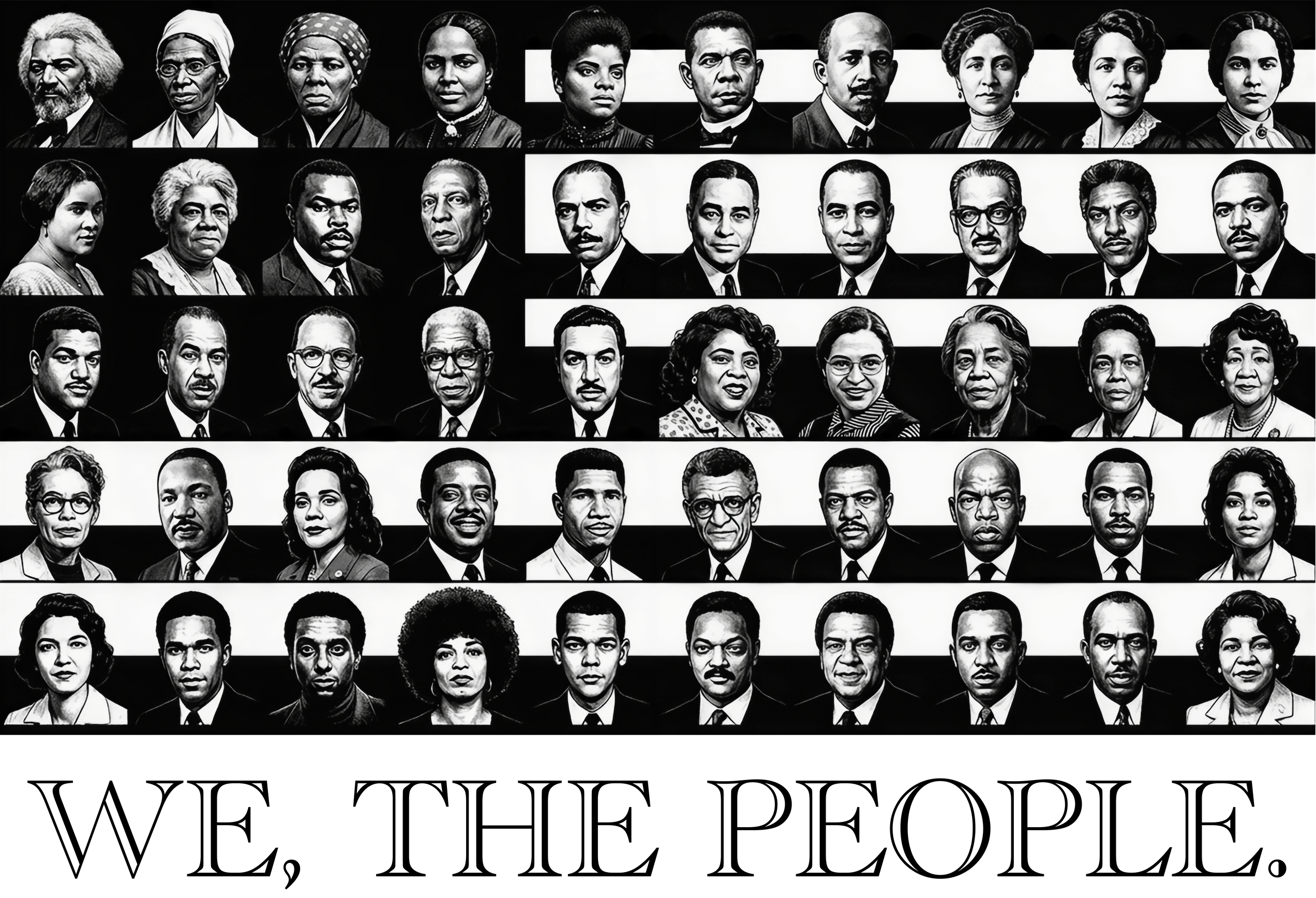
Fifty Black abolitionists, organizers, thinkers, legal strategists, artists, and movement builders form an alternative American flag — a reminder that democracy was widened through Black struggle, not granted by accident.
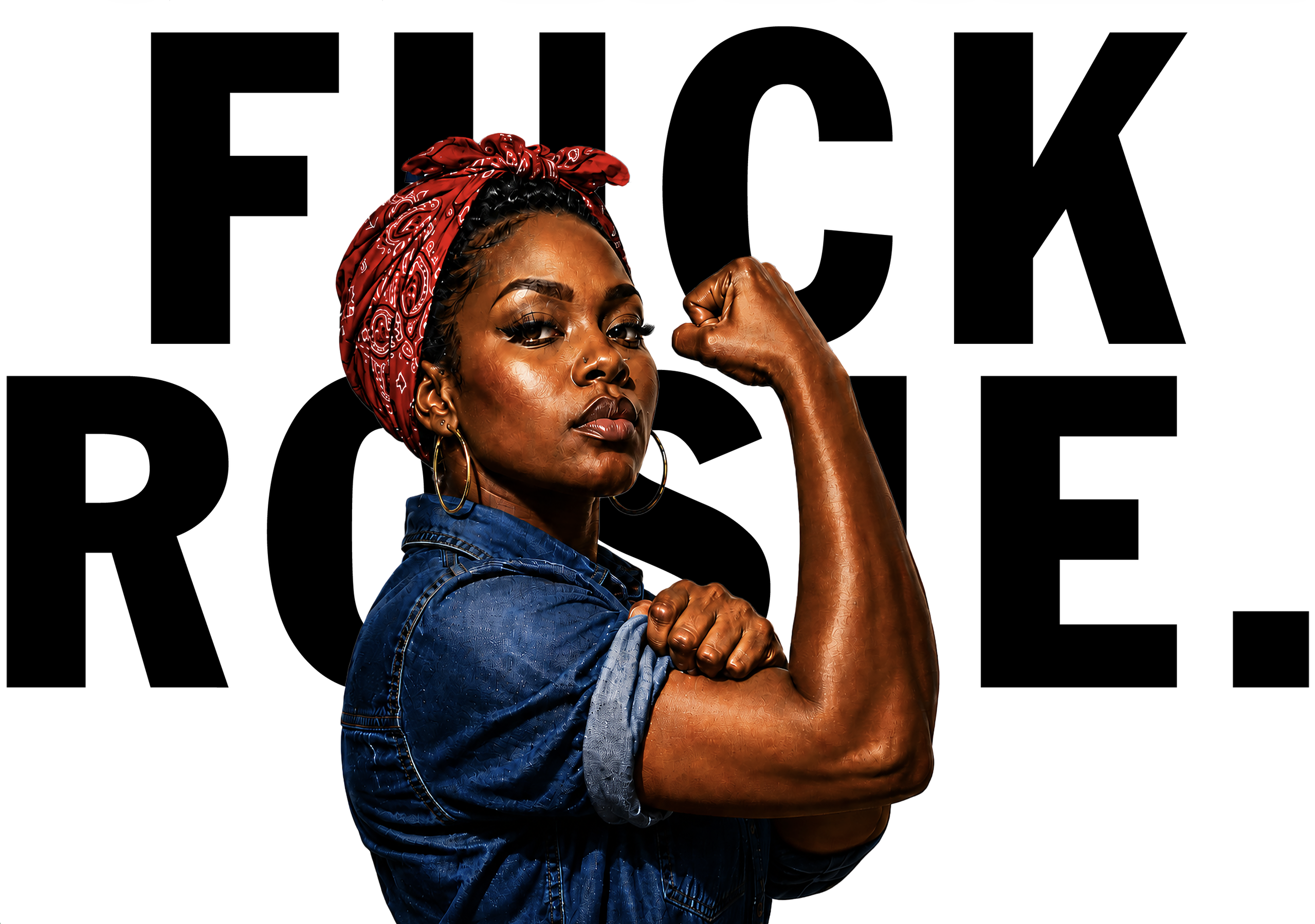
A satirical correction to the familiar image of women’s wartime labor — honoring the Black women who cooked, cleaned, nursed, washed, raised, organized, and carried America long before the credit arrived.
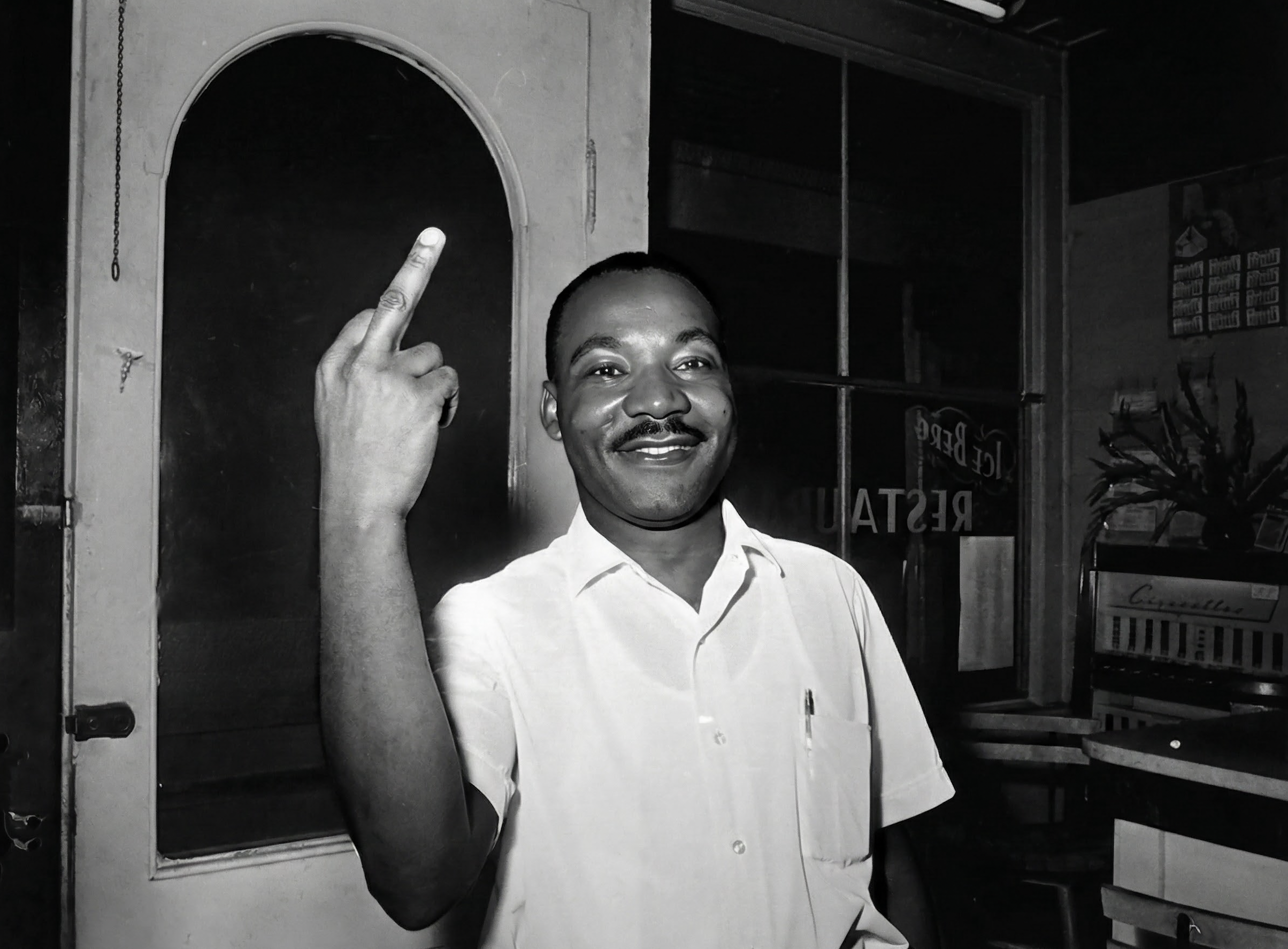
A satirical reinterpretation of a real 1964 civil-rights-era image of Dr. Martin Luther King Jr., altered as protest commentary against renewed efforts to weaken the protections secured by the Civil Rights Act.
More statements. More records. More reminders that history does not stay quiet when it is worn.
Shop all shirtsEach piece begins as memory, warning, refusal, or recognition— then becomes something visible.
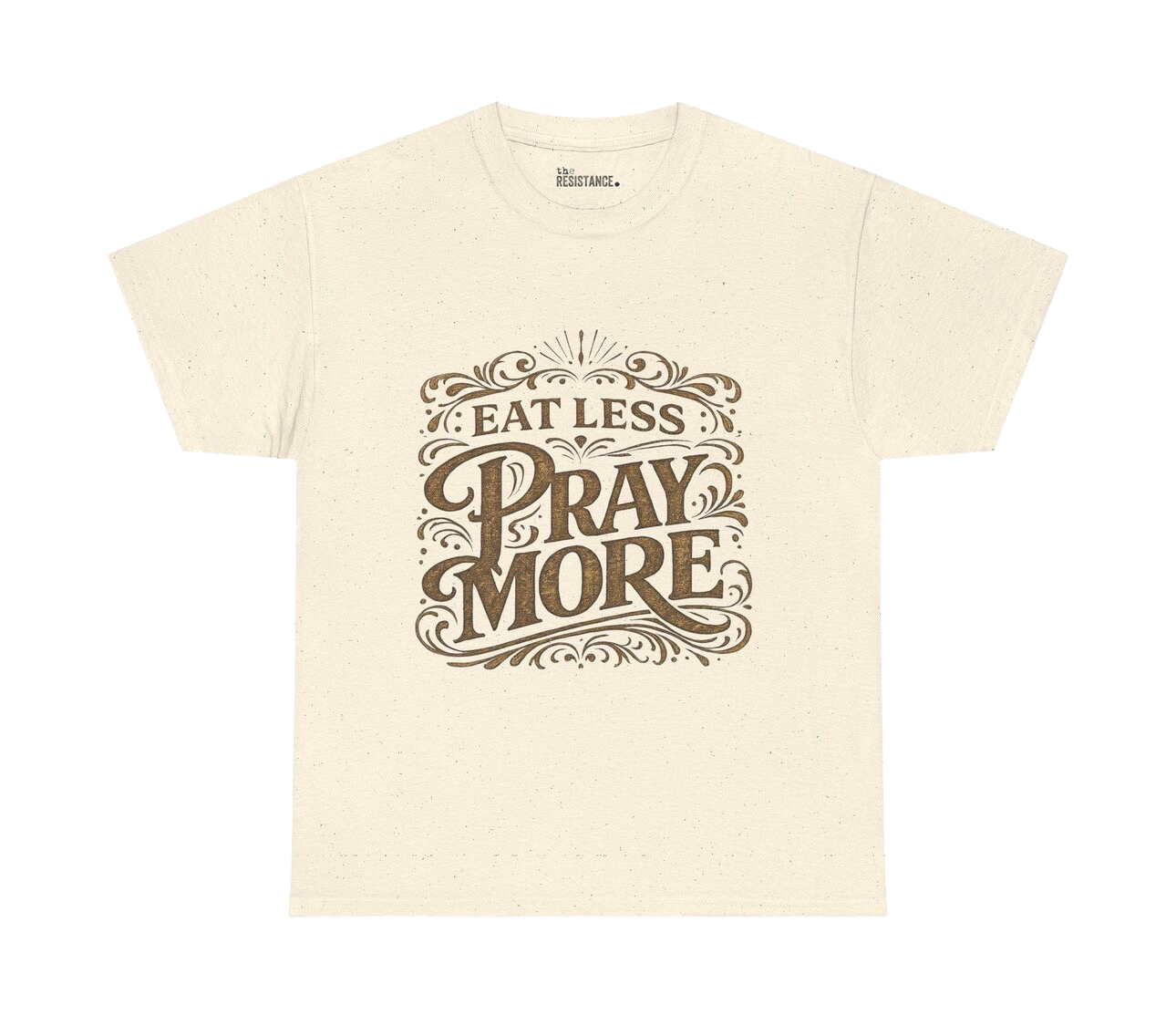
A statement about fasting from more than food—choosing spirit over appetite, discipline over impulse, and awareness over automatic living.
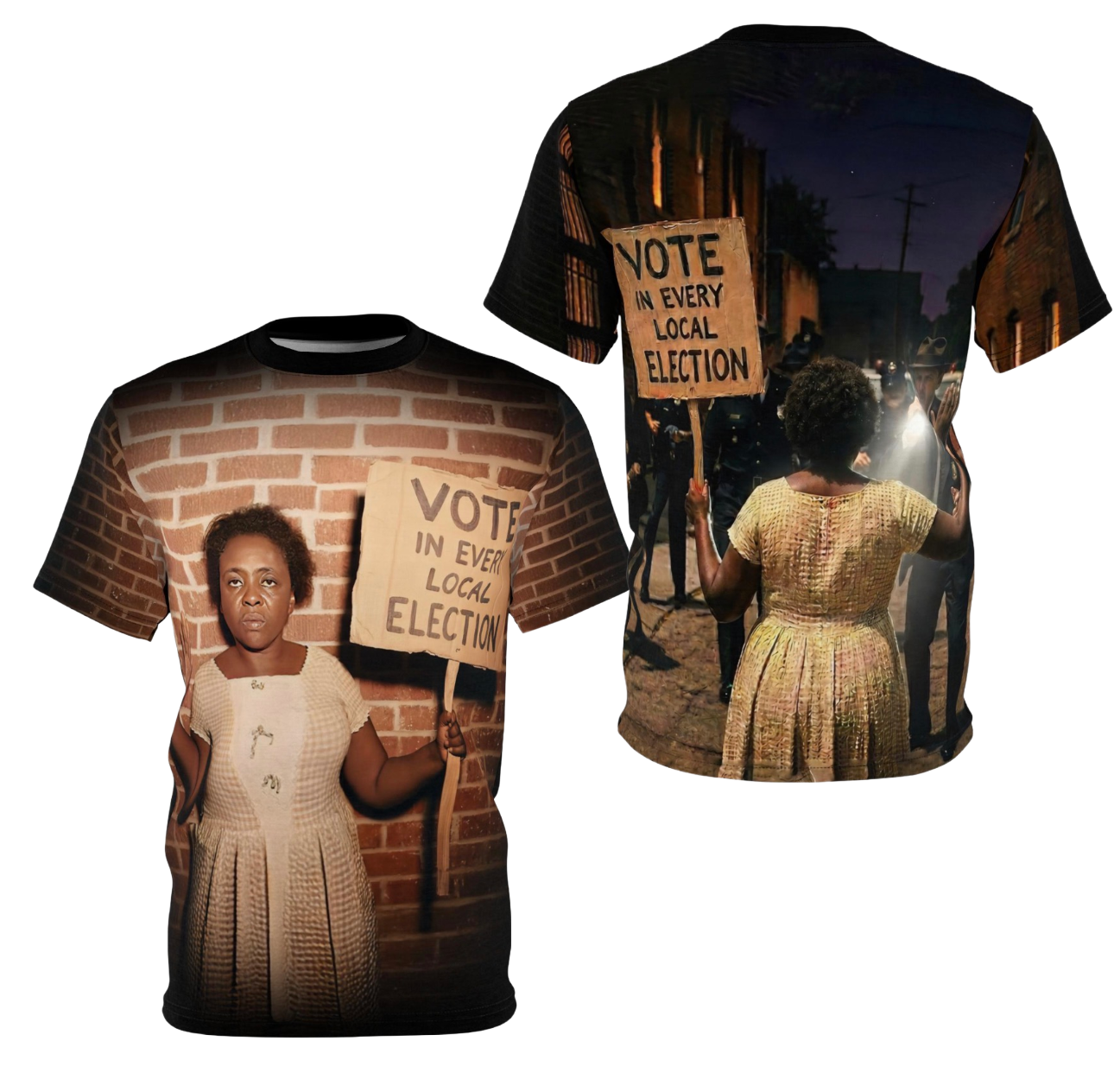
Political power is shaped through more than presidential elections. District maps, local offices, state government, election administration, and representation all matter.
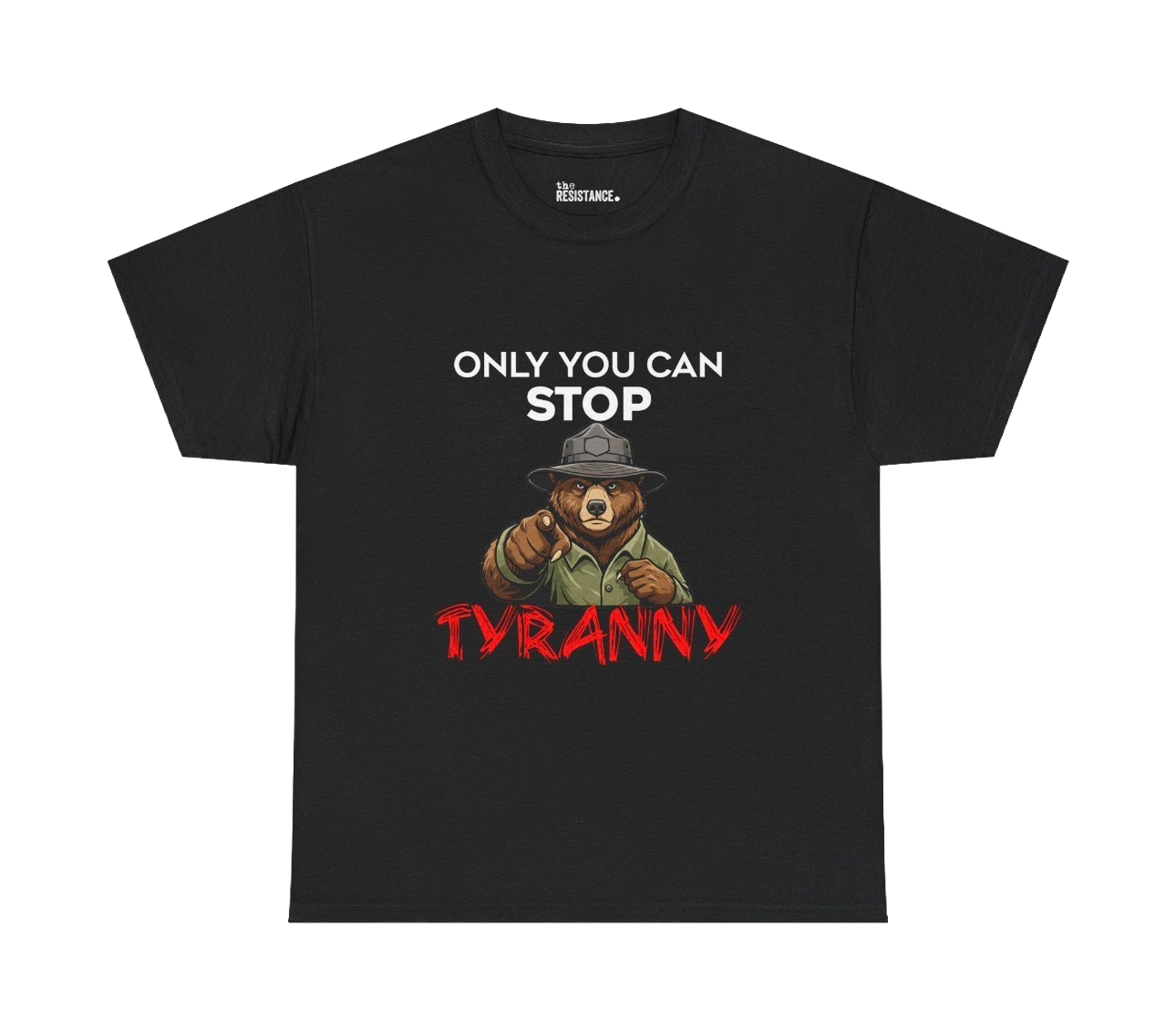
Democracy is not self-maintaining. People must recognize warning signs and act before fear, silence, or obedience becomes policy.
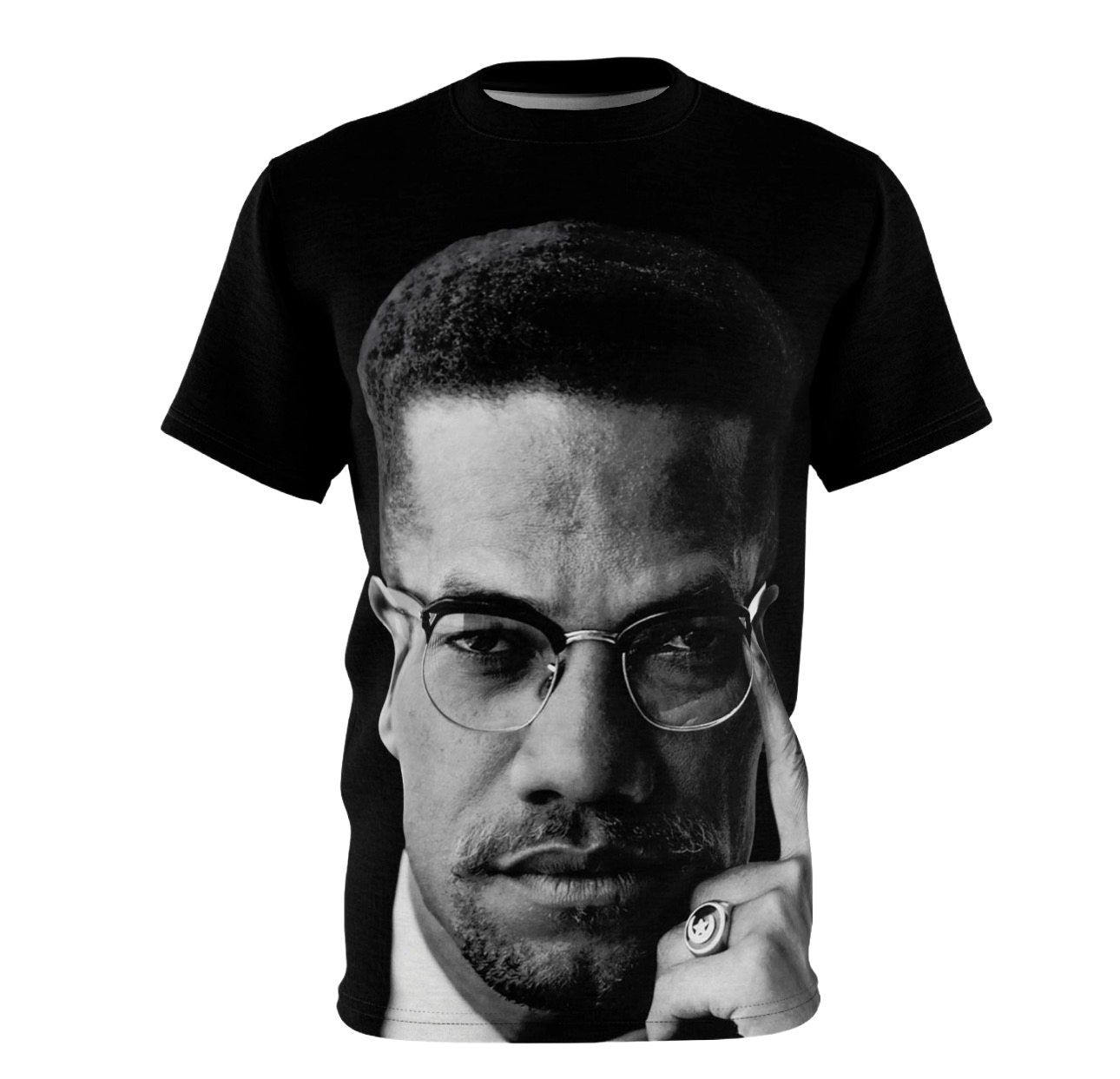
A statement rooted in clarity, courage, and the refusal to let comfort decide what history is allowed to say.
Fifty Black leaders form an alternative American flag— a reminder that democracy was widened through Black struggle, not granted by accident.
A satirical correction to the story of American work, care, credit, and the Black women who carried more than history admitted.
Fannie Lou Hamer forced the nation to confront the machinery controlling Black political power. Mamie Till-Mobley forced the nation to confront the physical evidence of racial terror.
Her warning extended beyond permission to register. Representation could be altered through intimidation, election rules, political boundaries, and decisions made while much of the public was not watching.
Hamer explains how political boundaries can change representation while many voters are not watching.
Hamer exposed the retaliation and violence used to suppress Black political participation in Mississippi.
Hamer’s warning connects voting to actual representation. Political lines can divide a community, change who represents it, dilute its influence, or move voters into an entirely different political reality.
State and local elections help determine who writes laws, administers elections, approves budgets, manages schools, selects judges, and participates in decisions surrounding political maps.
The message is direct: vote in every election. Political power is shaped during elections receiving the least national attention—not only during presidential elections.
Fannie Lou Hamer was born into a Mississippi sharecropping family and spent much of her early life working the land while being denied meaningful influence over the laws and officials governing it.
In 1961, while undergoing surgery for a uterine tumor, a white physician performed a hysterectomy without her informed consent. The involuntary sterilization of poor Black women in Mississippi became known as a “Mississippi appendectomy.”
In 1962, she attempted to register to vote. The plantation owner demanded that she withdraw her registration. She refused and was forced from the land where she and her husband lived and worked.
In June 1963, Hamer and other movement workers were arrested in Winona, Mississippi. Officers ordered incarcerated Black men to beat her with a blackjack while she was restrained.
In 1964, she appeared before the Democratic National Convention’s Credentials Committee as part of the Mississippi Freedom Democratic Party’s challenge to the state’s all-white delegation.
She described voter repression, retaliation, and the Winona beating before a national audience. President Lyndon Johnson called an abrupt press conference while she was speaking, but television networks later replayed her testimony.
Her message was larger than registration. Citizenship required actual political power: the ability to vote, remain meaningfully represented, choose accountable officials, and participate in every election shaping public life.
The Fannie Lou Hamer artwork connects her struggle for political participation to the elections and decisions that continue to determine whether communities remain represented.
Mamie understood that another account of racial violence could be doubted, softened, or ignored. She placed the evidence directly before the public.
Press play to hear Mamie explain why descriptions alone could not communicate what she had witnessed.
In August 1955, Mamie Till-Mobley sent her 14-year-old son, Emmett Till, from Chicago to visit relatives in Mississippi. He was abducted from his family’s home, tortured, murdered, and left in the Tallahatchie River.
Mamie demanded that his body be returned to Chicago. After seeing what had been done to him, she chose an open-casket funeral because words could not make people understand the extent of the brutality.
She wanted witnesses. She wanted the country and the world to confront what racial terror looked like when it believed its victims could be hidden.
More than 50,000 people attended the funeral. Photographs published by Jet and other publications carried the evidence far beyond Chicago.
The two white men tried for Emmett’s murder were acquitted by an all-white jury. They later described the killing publicly after receiving payment for their account.
Mamie refused to allow Emmett’s death to be treated as a private tragedy detached from the system that made it possible. She continued speaking, teaching, and organizing.
Her decision was a demand for public accountability: see what happened, understand what permitted it, and refuse to let the evidence disappear.
The front introduces Mamie’s demand. The back carries the photographic evidence she made public so the violence could not be softened, denied, or forgotten.
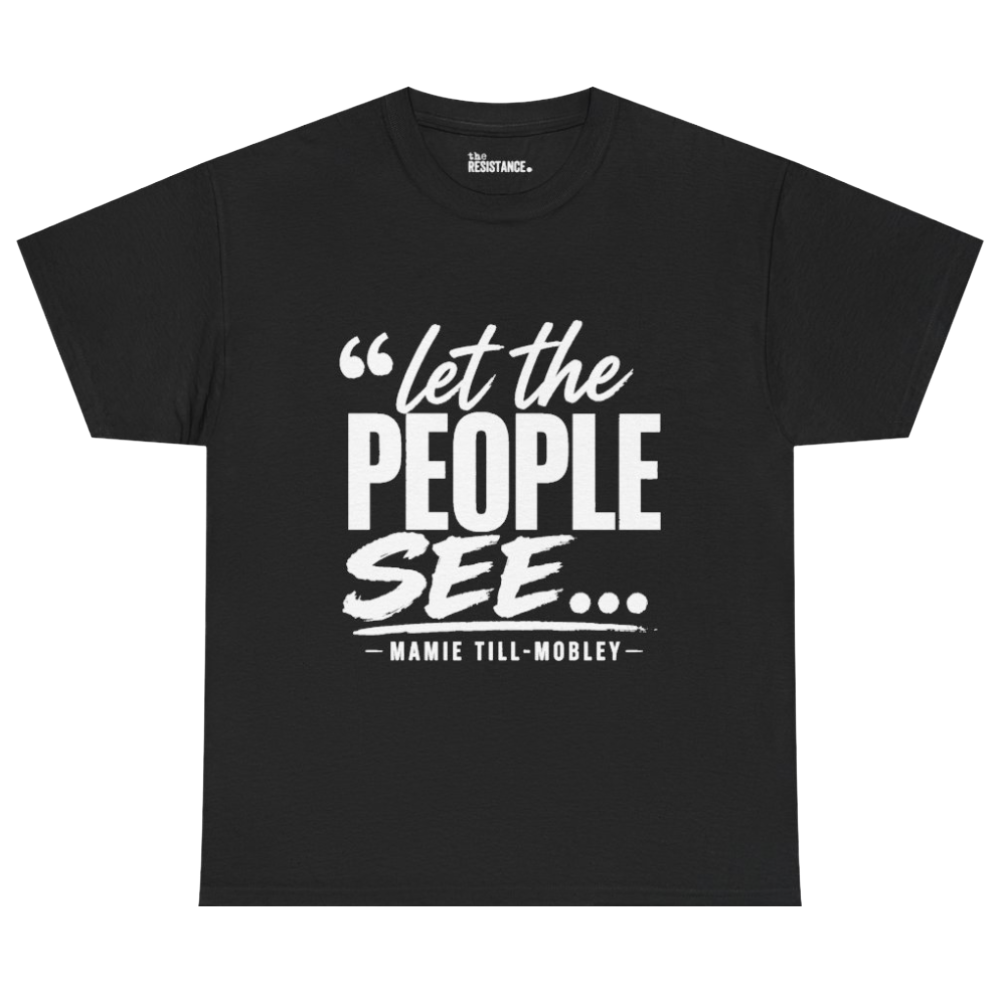
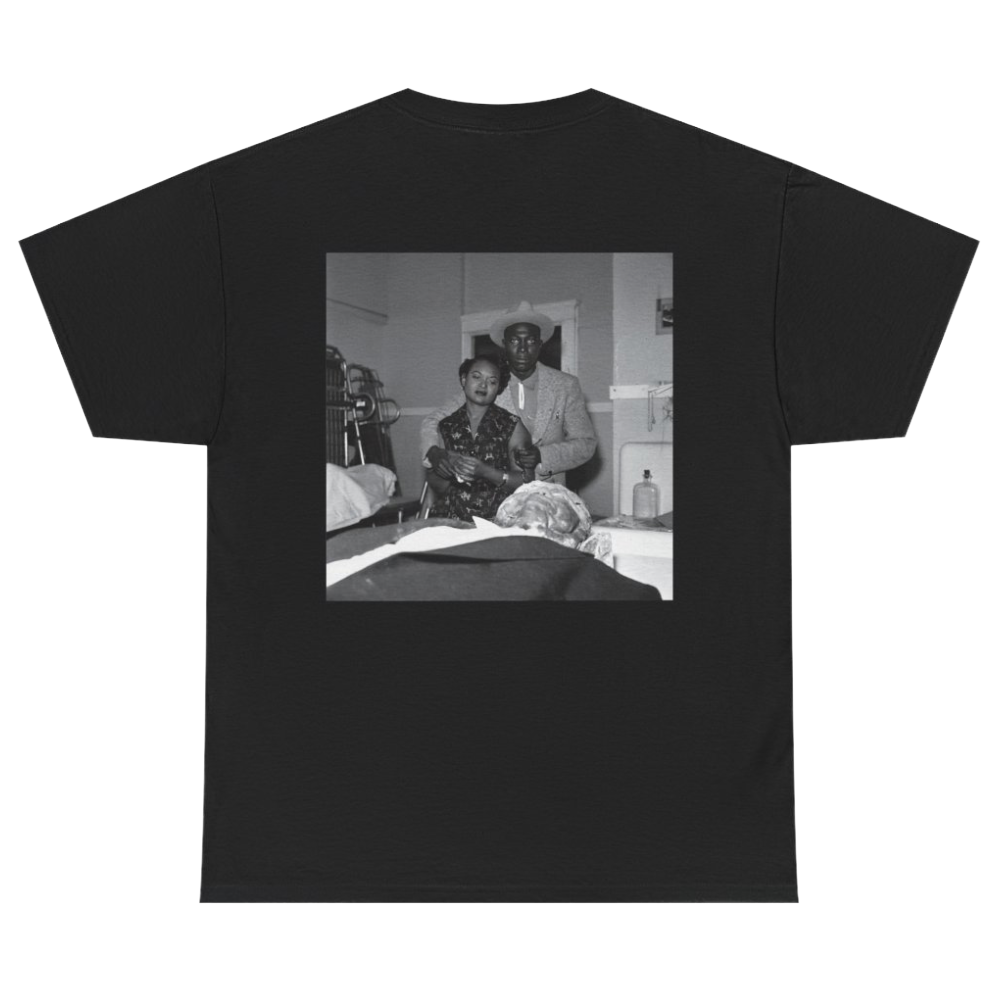
Fannie Lou Hamer exposed the violence behind political
exclusion.
Mamie Till-Mobley exposed the violence done to her child.
Neither allowed America to look away.
A reminder. A question. A mirror. A call to remember what happened, what lives within you, and what you can create when you observe the mind.
theRESISTANCE is for people who understand that memory is not passive. It is fuel. It is protection. It is instruction. It is how we stop becoming what tried to erase us.
It means remembering truth, history, ancestors, lessons, patterns, and the power within. Forgetting makes people easier to shape. Remembering restores awareness.
It resists injustice, silence, compliance, erasure, and the comfort of forgetting. It is not only opposition. It is the decision to stay conscious.
Because fear often speaks before truth does. Observation creates space between the thought and the action. That space is where choice begins.
Because what is worn becomes visible. A shirt can start a question, carry a memory, or say what someone else needed language for. The body becomes the billboard for the truth.
No. History is the record. Consciousness is how we move with it. theRESISTANCE connects what happened outside of us with what must awaken inside of us.
Yes. Custom pieces can be built around a phrase, a person, a legacy, a family story, an organization, an event, or a message that deserves its own visual language.
Shop statement apparel rooted in memory, truth, history, consciousness, and the courage to stay awake.
With memory, what was buried becomes visible again. The shirt becomes more than fabric—it becomes a witness.
Forgetting protects the version of history that power prefers. Remembering restores context.
With observation, fear loses its automatic control. You see the thought before you become it.
Resistance can begin by noticing what is moving through you before it becomes the thing that moves you.
With history, the pattern becomes clear. Every right was once a refusal.
Freedom struggles began with people refusing to disappear, surrender their voices, or allow violence to remain hidden.
With custom work, your memory, message, event, or legacy becomes something people can carry.
A phrase. A family story. A movement. A memorial. A truth that deserves its own visual language.
Every movement that advanced American life began when people refused to remain where fear tried to keep them.
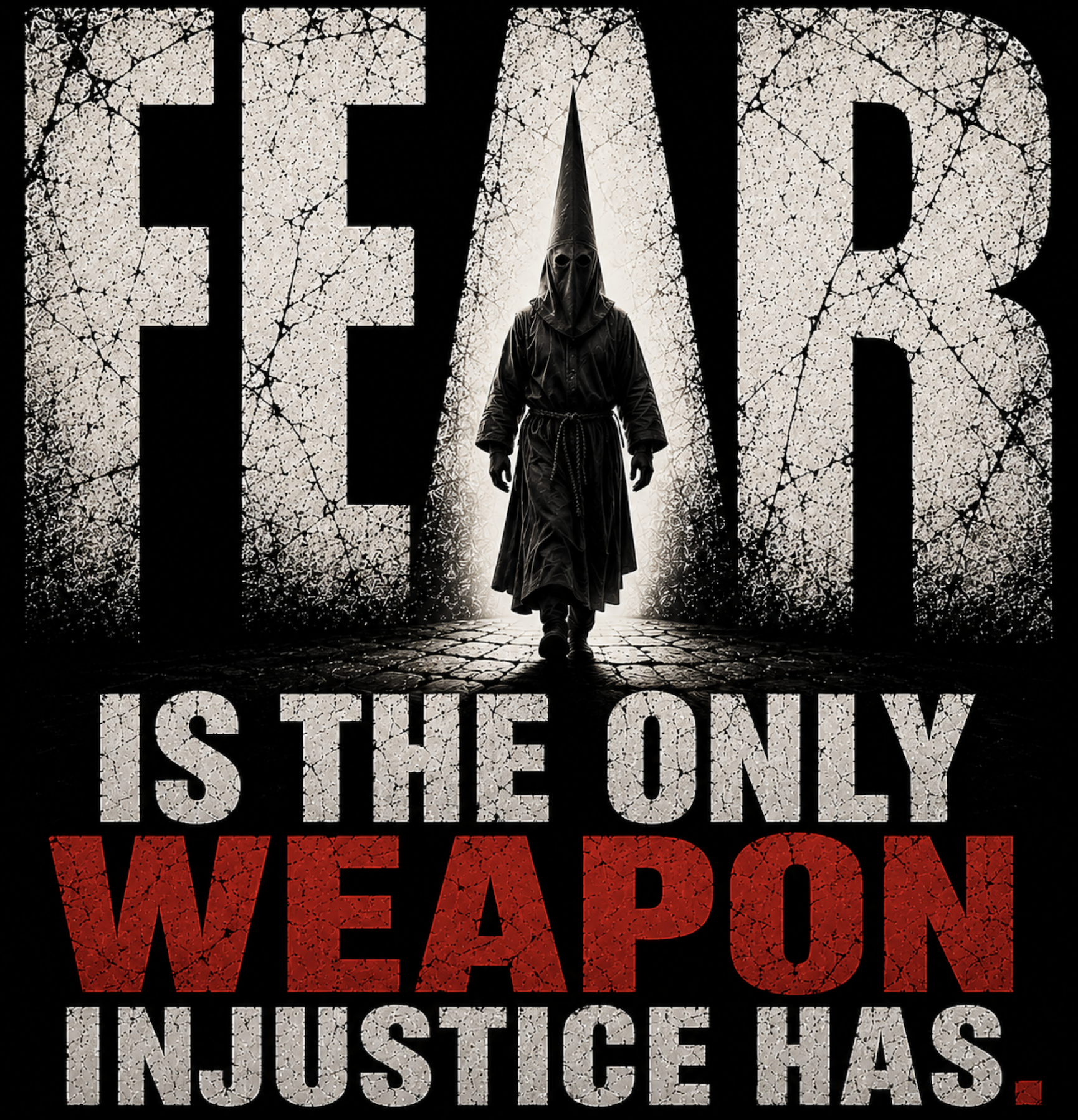
Injustice survives by teaching people to shrink, stay silent, comply, and forget their own power. Fear is one of its oldest weapons. Memory is one of the ways people break it.
What changed American life was not comfort. It was refusal. Civil rights, women’s rights, voting rights, labor movements, disability rights, immigrant rights, LGBTQ+ rights, and other freedom struggles advanced because people saw the structure clearly, organized with strategy, and moved anyway.
The point is not only to resist what harms us. The point is to rise above what tries to define us, remember what was fought for, and use that memory to move with intention.
The Black civil-rights movement did more than challenge segregation. It helped prove a method: witness, organize, litigate, march, vote, and refuse to disappear.
Brown v. Board opened the legal front in 1954. The Civil Rights Act of 1964 challenged discrimination in public life, schools, and employment. The Voting Rights Act of 1965 attacked discriminatory barriers at the ballot. The Fair Housing Act of 1968 extended the fight into where people could live.
Black freedom work gave America a blueprint: expose the violence, organize the witness, build the legal case, and force the country to choose between its ideals and its behavior.
The fight for voting rights kept expanding who counted. The 15th Amendment named race-based voter exclusion. The 19th Amendment expanded voting rights to women. The Voting Rights Act of 1965 targeted discriminatory practices like literacy tests. The 26th Amendment lowered the voting age to 18.
Voting rights are never just about ballots. They are about power, representation, and whether the governed are allowed to shape the government.
The 19th Amendment marked a major victory in 1920. The Equal Pay Act of 1963 challenged wage discrimination. Title IX in 1972 challenged sex discrimination in federally supported education programs.
Women’s rights movements pushed the country to confront power inside the home, workplace, classroom, court, and ballot box.
The labor movement fought for the right to organize, fair pay, safer workplaces, and limits on exploitation. The National Labor Relations Act of 1935 strengthened collective bargaining. The Fair Labor Standards Act of 1938 established major wage, hour, and child-labor protections. The Occupational Safety and Health Act of 1970 addressed workplace safety.
Labor rights remind us that freedom is also economic. A person cannot fully rise while their labor is treated as disposable.
Section 504 of the Rehabilitation Act of 1973 prohibited disability discrimination in federally funded programs. The Americans with Disabilities Act of 1990 expanded protections across public life.
Disability rights made the country confront a simple truth: exclusion is not natural. It is designed. And what is designed can be redesigned.
The Stonewall Uprising of 1969 became a major turning point in LGBTQ+ civil-rights history. Lawrence v. Texas in 2003 changed the legal landscape for same-sex intimacy. Obergefell v. Hodges in 2015 recognized marriage equality nationwide.
The movement insisted that private truth deserved public dignity, legal recognition, and safety from state punishment.
The Immigration and Nationality Act of 1965 reshaped U.S. immigration policy by moving away from the national-origins quota system. Immigrant-rights movements have continued to fight over family, labor, asylum, belonging, and the meaning of citizenship.
This struggle asks who gets to be seen as part of the nation, and who benefits when people are made afraid to be visible.
Education has always been one of the clearest places where power tries to reproduce itself. Desegregation, Title IX, disability access, language access, and school-equity fights all show how education becomes a battleground over who is allowed to imagine more.
When people fight for access to knowledge, they are fighting for the future before it arrives.
They remembered what power tried to erase, organized where fear told them to shrink, and moved so the next generation could inherit more than silence.
The outer fight matters. So does the inner one. A thought can become a fear. A fear can become a pattern. A pattern can become a prison.
This is resistance in its quietest form: seeing what is moving through you before it becomes the thing that moves you.
Fear speaks first. Memory answers. Consciousness chooses.
The thought loses power when it is seen clearly instead of obeyed automatically.
Not every feeling is truth. Some reactions are inherited from systems that benefited from your silence.
This is where resistance becomes discipline: seeing clearly enough to act with intention.
Custom statement pieces for people, families, organizations, and communities carrying a message that deserves more than a template.
A custom piece can honor a legacy, mark a moment, name a truth, or turn a shared belief into something people can wear, hold, carry, or give.
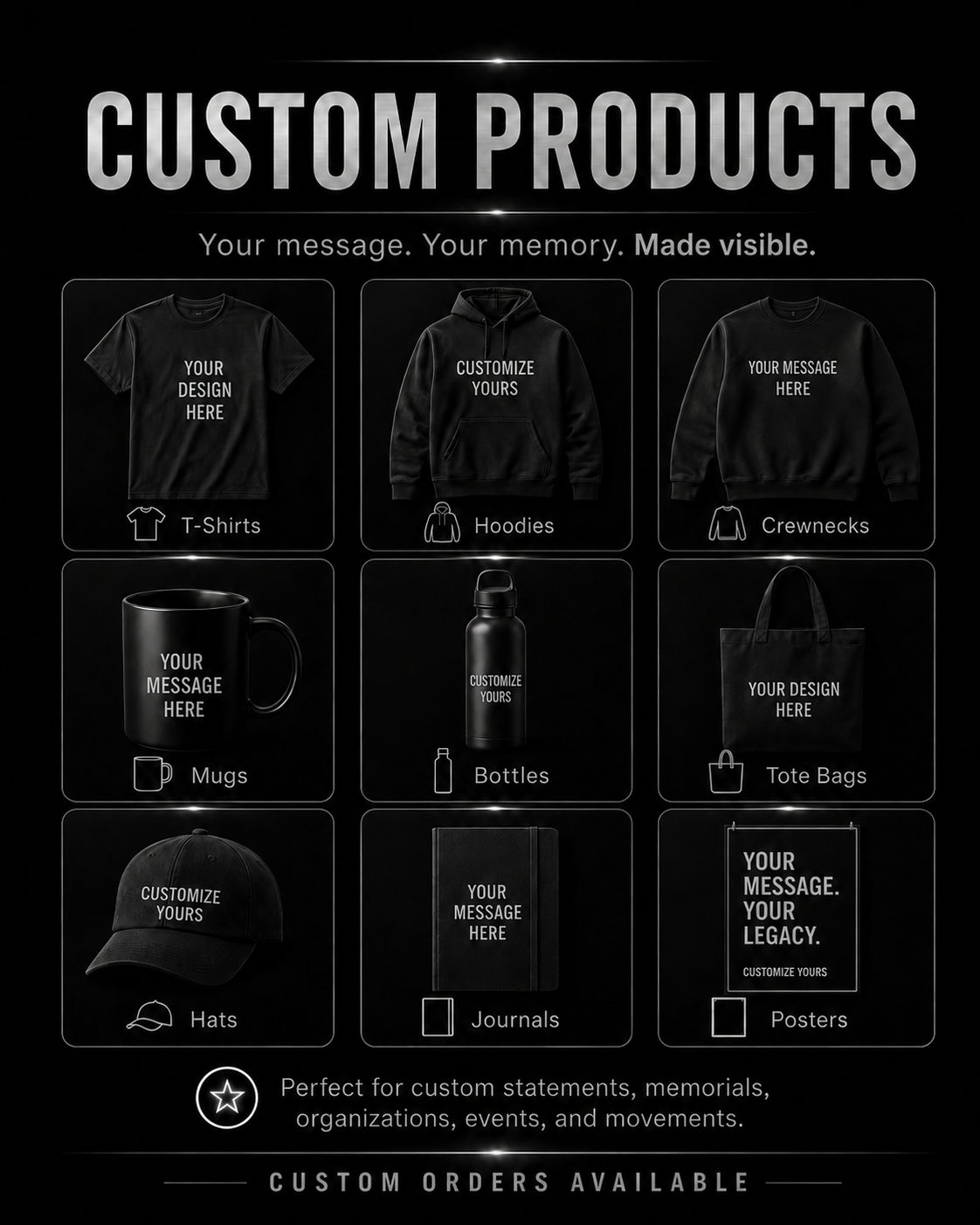
Bring the idea, phrase, memory, event, or cause. The product comes after the message is clear.
on your first order